Courtney Barr

Story 6 Word 386

Community, Education
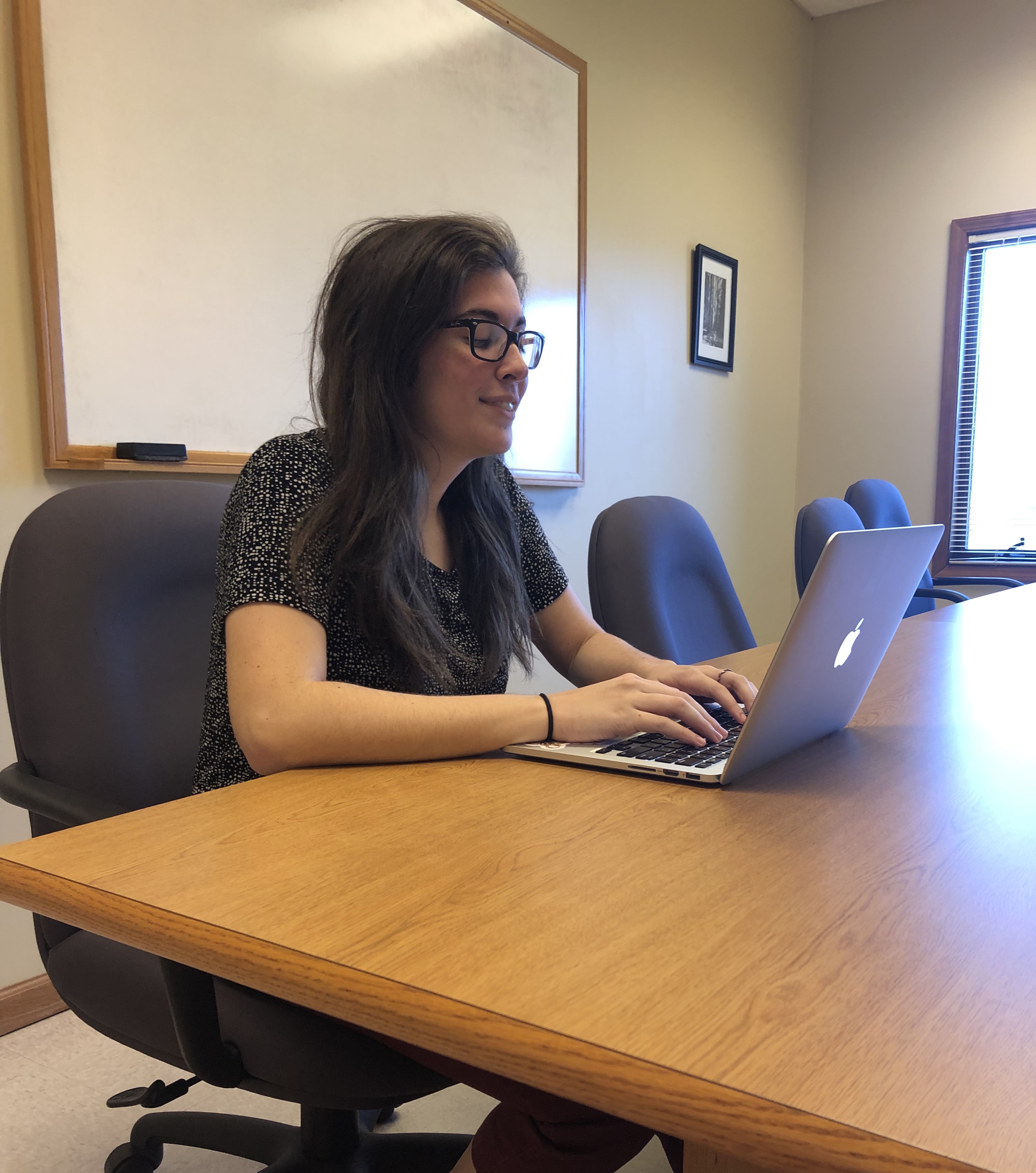
PLANNING- Student teacher Stephanie Winslow writing her lesson for the fourth-graders students at Allen Elementary.

Each year, Indiana lawmakers reevaluate Indiana’s standardized testing. In April, Allen Elementary School and other schools across Indiana are making a switch in standardized testing coming.

The standardized testing is being switched from Indiana Statewide Testing for Educational Progress to Indiana’s Learning Evaluation Readiness Network. This new standardized testing called ILEARN comes with a couple of changes.

Heather Veatch, a fourth grade teacher at Allen Elementary, said, “The major difference most teachers know is that the ILEARN is online. My biggest worry going into the new standardized test is teaching the fourth graders how to type. I am also afraid my students will not have enough time to type what is needed.”

Other ILEARN differences include faster results for parents. Veatch said that, previously, the results took over four months that by the time parents received the results the child was already in the next grade. Within twelve days, parents will obtain their child’s ILEARN results.

Stephanie Winslow, a student teacher at Allen Elementary, said, “I think the test will be adaptative to students in the twenty-first century because of the way technology has advanced over the past five years.”

The test will to have fewer frustrations especially since it is on the computer.

Now that the test is online, ILEARN can easily translate into different languages.

Starting on April 22, ISTEP will not be given to elementary schools. High school students will participate in ILEARN testing for Biology. Otherwise, ISTEP Mathematics and English/Language Arts will continue to be a requirement for students graduating in 2018-2019.

ILEARN has the same format as the ISTEP. The test will be formatted to fit the grade.

Anthony Williams, the Allen Elementary principal, said, “The school has made changes over the past year. Our school has increased the amount of technology in each grade.”

Older grades have to do their homework online. Veatch said, “My students do all their exams and homework online.” 

The school has also changed its rules on how much technology activity each child should be allowed. The school used to have kindergarteners have a 2-to-1 ratio with tablets. Now kindergarteners are allowed more time and have their tablet to use every day.

Williams said, “I believe Allen Elementary students are prepared for the change of ISTEP to ILEARN.”
Courtney Barr

Story 5 Word 389

Community, Education

On Mar. 12 Marion High School held a school board meeting to honor McCulloch Junior High School band and choir students, budgets and closing on the Tucker building.

The state reevaluates money given to schools every odd year. In 2019, the state is giving more money to the schools in poverty.

Dr. Bob Schultz, assistant superintendent of Marion Community Schools, said, “The state average cost for a student is $91. In Marion it will cost parents $66 dollars per child.”

As the state evaluates money given to schools, the cost of each child would be different.

McCulloch Junior High School had Indiana State School Music Association solo and ensemble contest on March 1. The students started preparing for the ISSMA contest in January.

Christina Huff, McCulloch Junior High music teacher, said, “My choir students worked so hard that we had to come in on Saturdays to prepare for Indiana State School Music Association.”

The seventh and eighth grade choir groups participated and received a gold rating. Huff said over two hundred students participated from both band and choir.

The jazz band received a gold with distinction. The rating of gold with distinction is higher than gold.

Ron Ways, McCulloch Junior High band teacher, said, “This is our third year in a row the jazz band has received gold with distinction. It is one of the highest honors and I did not hear of any other band receiving the rating.”

Twenty-seven band students all received gold ratings. While choir had 7 ensembles and 6 solos. Out of the total performances all except 2 received gold ratings. The other 2 received silver ratings.

Lynn Gosser, McCulloch Junior High principal, said, “I am so proud of all our band and choir students because they have put in so many hours to accomplish what they did.”

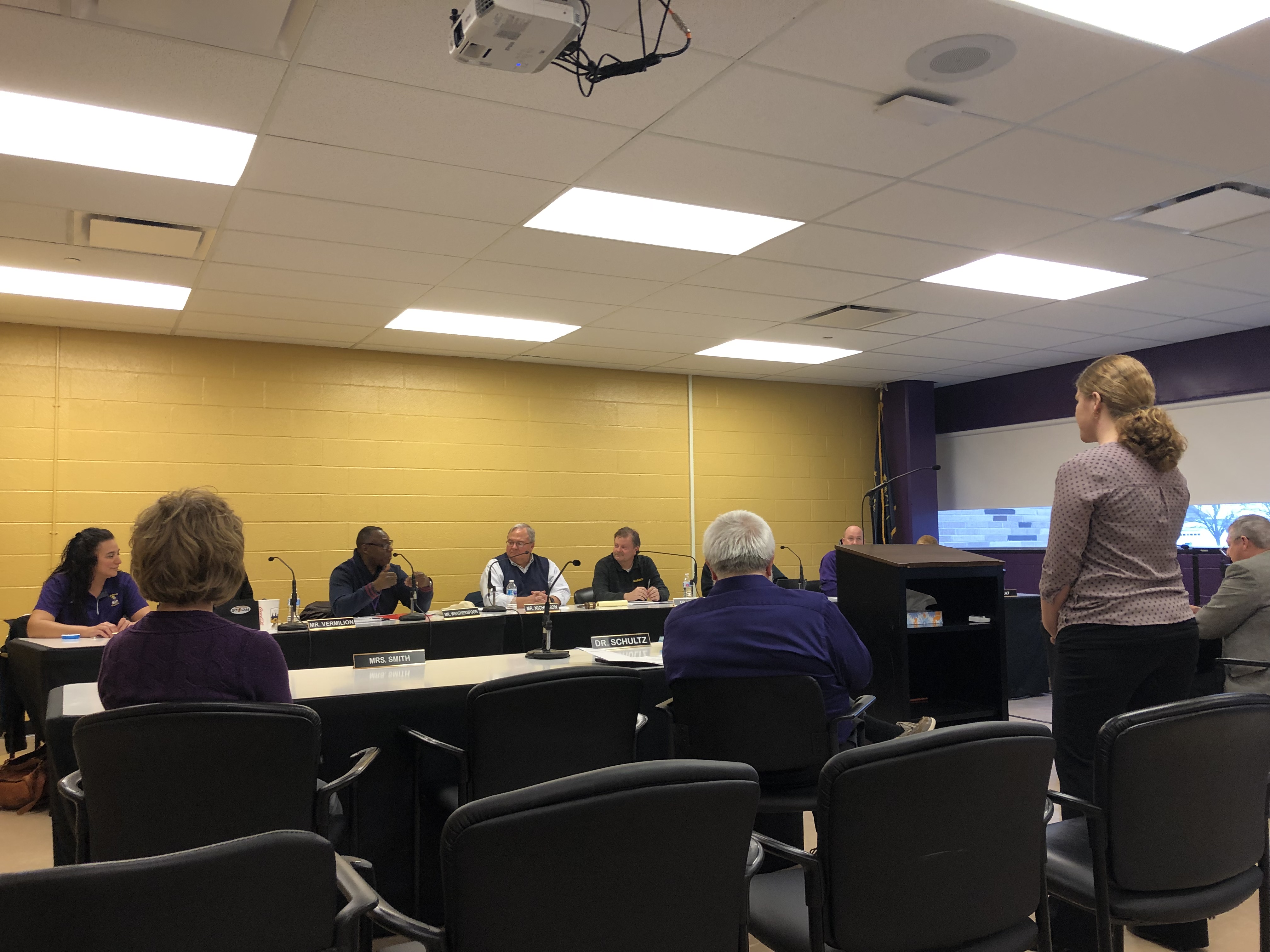
SCHOOL BOARD- The school board honoring McCullough Junior High school band and choir teachers for their accomplishments at ISSMA solo and ensemble.

Indiana Wesleyan University closed on the Tucker Building located on 107 S. Pennsylvania St., Marion, Indiana on Thursday.

Marion schools used the Tucker building as a vocational option for high school students wanting to pursue a career in automotive technology, collision repair or construction trades. IWU has not started using the building and offered to let Marion community school to use it as storage.

The next board meeting is on Apr. 9 at Marion High School at 7 p.m.

On Feb. 25 Marion High School held a school board meeting where the board members discussed a donation and honored two community members.

Dr. Bob Schultz, assistant superintendent of Marion community schools, said to the school board that he attended an event at the Tree of Life atrium about the death of Merlin J. Loew.

Loew has given money to the Marion schools for the past couple of years. Loew recently passed away and had two trusts set up for the Marion community. During the event, Loew’s attorney $3 million his money to over nineteen organizations in Marion.

Schultz said, “Marion community schools received 3 percent from Loew’s second trust that made up $94,830. I did not think Marion schools would receive much because we were only receiving 3 percent.”

Loew had instructions for how each organization should deal with the money given to them. The money given to Marion Community Schools was to be used for food and clothing for the children who cannot afford the necessities.

Dr. Brad Lindsay, superintendent of Marion Community Schools, said, “I am so grateful for Loew’s generosity over the years. He has donated an estimated total of $7 million.”

During the boarding meeting, the board honored Gail Ball, Levi Hofmann and Hailey Teeguarden. Ball served the Marion community for 40 years, as a bus driver. Hofmann and Teeguarden are the top archery shooters in Indiana.

Ball started working for Marion schools in October 1978. Ball said, “I am so happy I accepted the job as a bus driver because I have enjoyed getting to know generations of children over the years.”

 She said the school required two things of her: to love children and be able to drive stick shift.

Ball said, “When I took the driving test, she just had to drive around the block without running over curbs.”

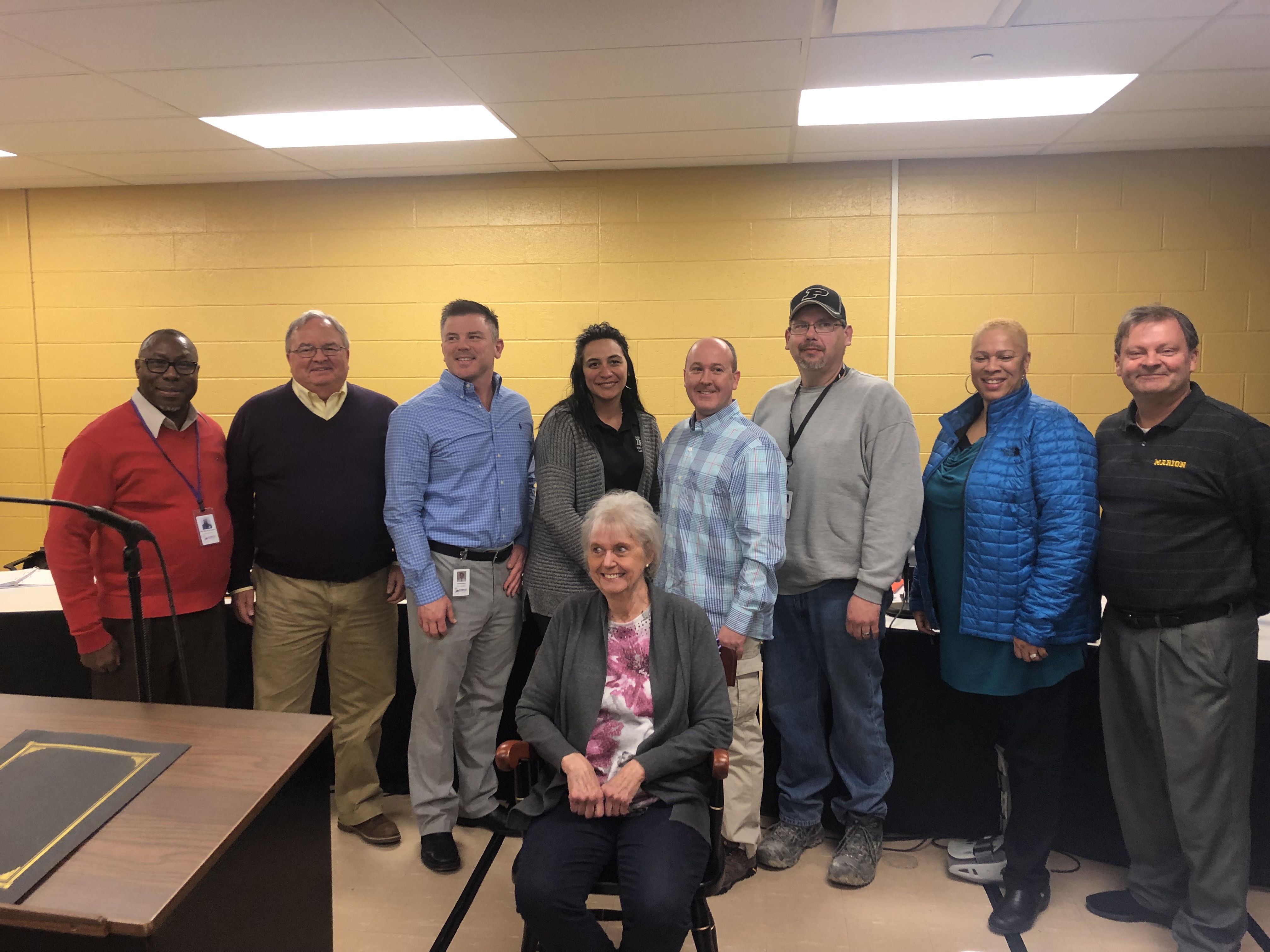
SCHOOL BOARD – Gail Ball received a rocking chair from the school board for her 40 years of work.

Hofmann and Teeguarden competed in an archery contest last week. They finished within the top twenty. Hofmann is ranked 1st in Indiana. Overall, he is ranked 26th in the United States.

The next board meeting will be held on Mar. 12 at 7 p.m. at Marion High School.

Courtney Barr

Story #3 391

Campus, Student Government

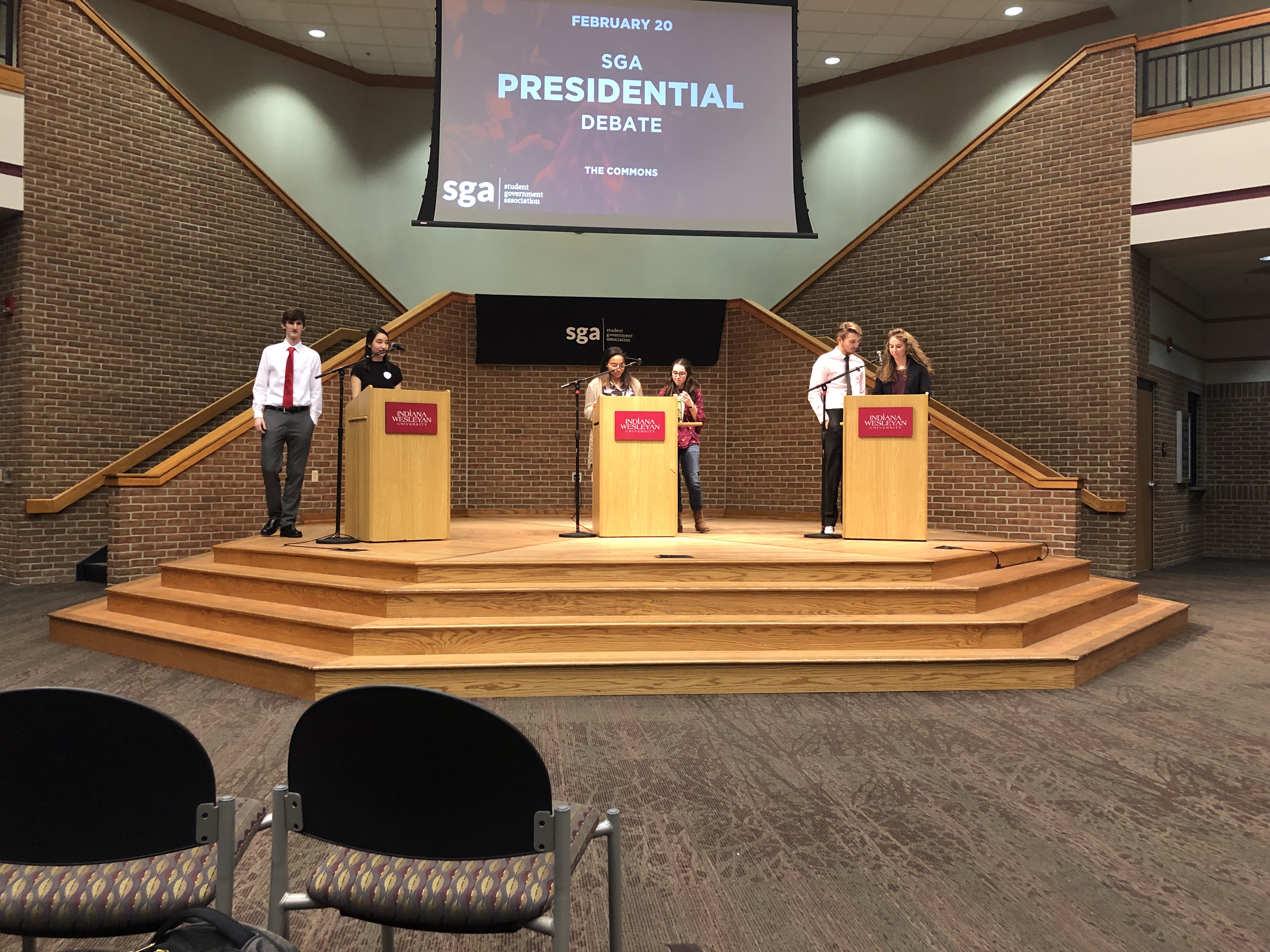
On Feb. 20, Indiana Wesleyan University’s Student Government Association hosted its presidential debate in the student Commons to inform students about the candidates running for the SGA student body president, and vice president and other open positions.

The event began with the presidential candidates sharing how their personal qualities qualify them for the presidential position. The candidates were asked several questions about the responsibilities they would have in office. The questions were designed to provide the audience with a picture of what each candidate exemplifies. 

The candidates running for SGA president are Alex Salmons, Chloe Tatom and Aaron Scott.

Rebekah Hoffaman, Erica Brown and Lainie Holland are running for vice president.

Each candidate shared ideas regarding how to improve communication between SGA and IWU students. Salmons and Hoffman plan to make a remind text system. The system will be similar to the IWU alerts students receive now.

Tatom said the candidates prepared for the event by formulating answers for a list of topics that the candidates may be asked questions from.

Later on, both the president and vice president were asked questions by the IWU students.

Micah Withers, an IWU student, said, “The remind thing is a good idea the only problem is getting people to sign up for it.”

Tatom and Brown plan to keep the notifications the same through announcements done in chapel. Tatom said, “I believe the system set in place works well, but I think the student government meetings could be more welcoming. When I get elected, I want to plan to have the meetings in one of the banquet halls to accommodate more people.”

Scott and Holland also plan to initiate more communication to IWU students about SGA in Chapel.

Hoffman said, “I believe another problem IWU faces is the lack of handicap accessible doors and bathrooms. I spoke to a student who suffered an injury and she told me about the lack of help from IWU.”

If IWU students missed the presidential debate on Feb. 20, SGA recorded and uploaded the presidential debate to SGA’s Facebook page.

The polls will open on Feb. 27 for the IWU student to vote for SGA student body president, vice president and other open positions. IWU students can vote in the Barnes Student Center Mall-way, on IWUs review or at iwusga.com.

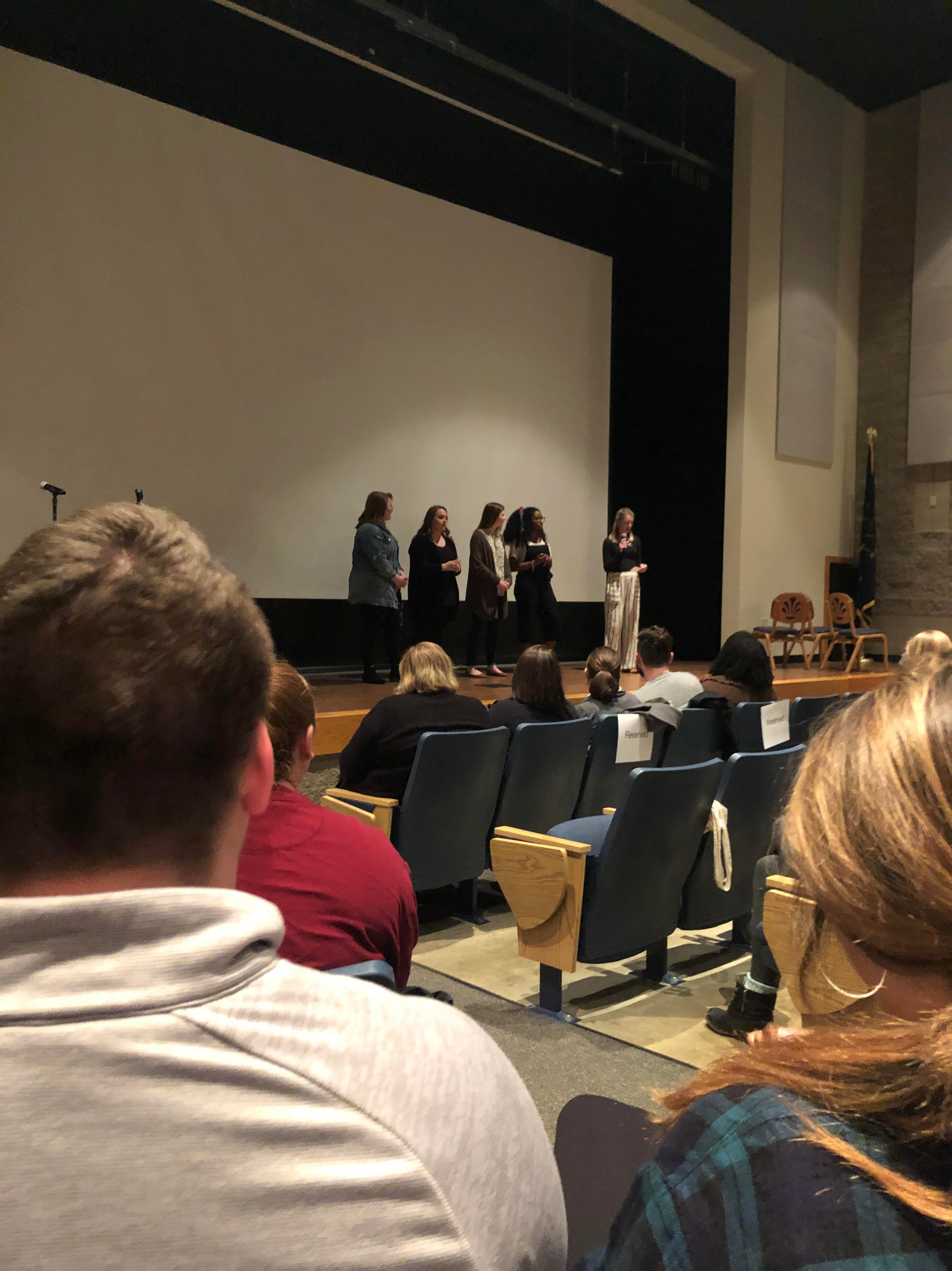
On Feb. 6, the Indiana Wesleyan University (IWU) Student Government Association (SGA) hosted, Awareness Night, an event raising awareness surrounding Human Trafficking at the Globe Theater.

The purpose of the event was to inform IWU students, faculty and the Marion community about global human trafficking.

The event included speakers who worked with individuals in human trafficking around the world, including Marion. The speakers at the event included Jason Tash, Sia M’bayo and Janet Bailey.

During the Q&A portion of the night, each speaker described their roles in Marion or around the world. Tash discussed his role in Destiny Rescue. Tash traveled the world rescuing girls from strip clubs. M’bayo works for a strip club ministry in Marion. Bailey is the Executive Director of First Light Child Advocacy Center in Marion.

Kira Raquet, vice president of SGA Student Activities, led the evening with help from both student representatives and her classmates. The classmates that assisted her included Jaden Harrison, Rylee Smith, Brady West, Lauren Stahley and Haley Perry.

Raquet said that she and her classmates started planning this event during the month of November. The reason Raquet and her classmates planned the even was the impact their Issues of Human Trafficking class had on them last semester at IWU. The group was instructed to complete a project about human trafficking as part of their course requirements. Raquet wanted to provide an event for Indiana Wesleyan University instead of a paper. 

The event started with the showing of “Nefarious,” a documentary about individuals who had been affected by human trafficking. The documentary discussed statistics about how many people are trafficked in the world annually.

Katelyn Ayers, an IWU student, said, “’Nefarious’ was (an) eye-opening documentary and got to learn lots about what human sex trafficking looks like both international and in the states.”

The Abbey Coffee Co. provided coffee and Fairtrade snacks for the event. Raquet said, “Fairtrade is a product made without using unfair human labor sometimes slave labor, but when it is Fairtrade, they know the farmer or producer and can track that product exactly where it came from.”

During the Q&A portion of the event, a student to asked about how students can take action with human trafficking around the world and in the community.

Brianna Westover, a senior SGA Representative, said “I think a lot of people do not know how real human trafficking is and that is it local and is happening here in America. I hope it stirs people’s hearts to taking action as much as they can for people who do not have a voice.”

Courtney Barr

Story 1, 449 words

Campus, 2/5/19 – Student Government

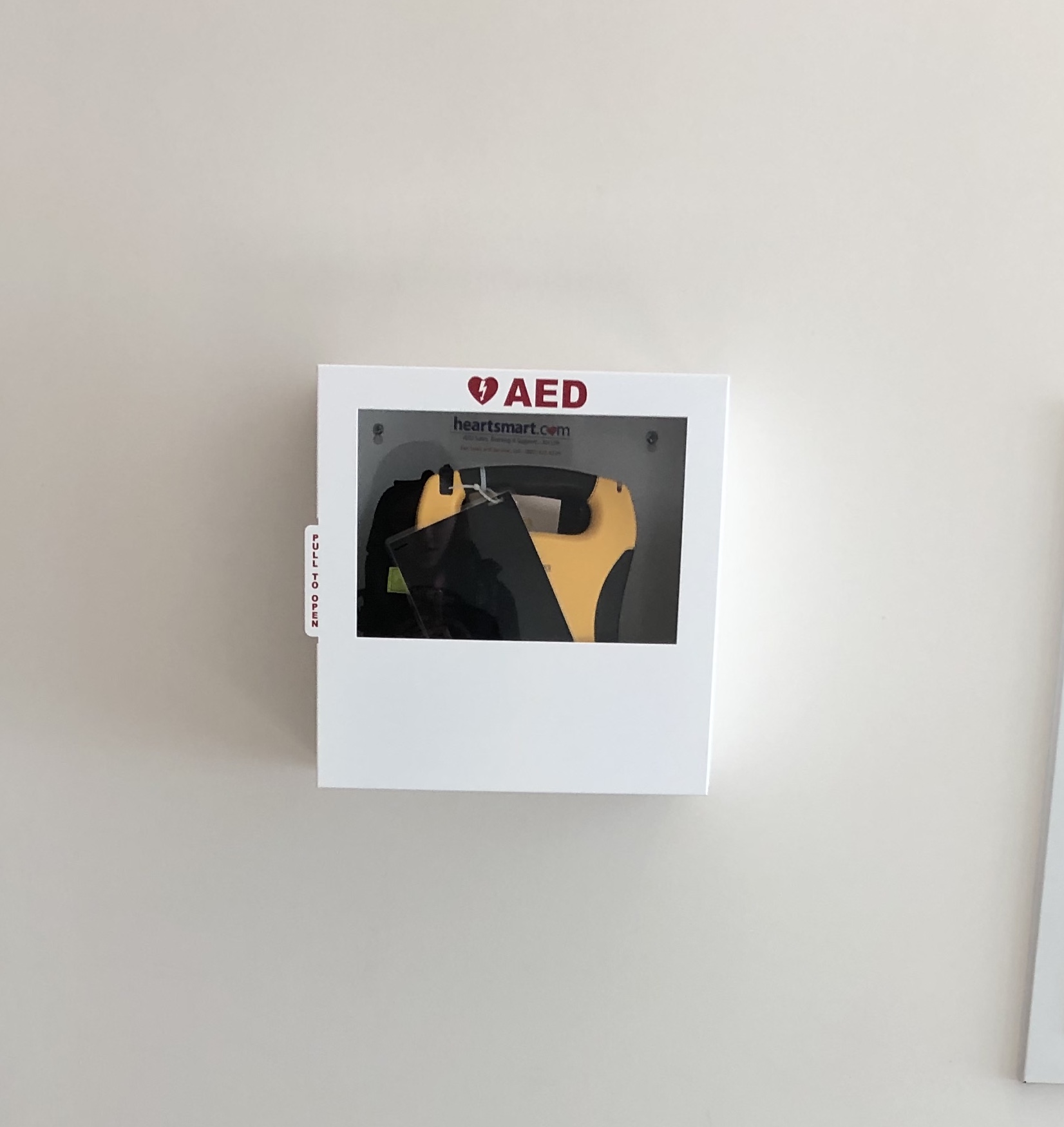
On Jan. 28, the Indiana Wesleyan University Student Body Government addressed safety concerns regarding the need for automated external defibrillators, commonly known as AED’s, in residential dorms as well as a new safe ride app.

Safety was a big discussion topic of the meeting. When the meeting developed into open floor, the Academic Senator of the Health and Human Performance Division, Christine O’Leary, brought up the safety issue of not having readily accessible AED’s in residential halls. It was brought to O’Leary’s attention after an IWU student observed that the issue could arise and there are no emergency protocols for these traumatic events in every residential hall.

The Executive Vice President, Jacob Schroer, wrote down the idea of having AED’s in every residential hall will be discussing the idea with the board.

“The idea of AED’s getting approved could take months to weeks depending on the urgency of the situation” O’Leary said.

In emergency situations, the nearest AED’s are in the Barnes Student Center, Chapel, OTT Hall, Burns Hall, Troyer, Philippi Performing Art Center, Police cruisers, and the Recreational and Wellness Center.

“I only know of two locations where AED’s are located on campus, both in the Recreational and Wellness Center and Barnes Student Center” Indiana Wesleyan Student Rachel Goepper said. “There should be an AED in at least every single resident hall even on every single floor of the residential halls” Goepper said.

If AED’s were to be set up in every residential hall, then the process could take even longer to initiate, since IWU would have to also adequately train residential staff in using this new safety equipment. Senior Representative Briana Westover said, “I think the idea of having an AED in every residential hall would be great, but I know that they would have to train all the staff on how to use an AED.”

Another safety issue discussed was Campus Police’s safe ride policy. It came to the student government’s attention that safe ride’s transportation can take up to an hour before someone is picked up. Student government is working with campus police to create an app that allows students to check-in via their mobile device. The app will make it easier for safe ride to be attentive and organized.

“Safe ride could be more efficient by using an app,” IWU Student Rebecca Stahler said. “I called safe ride at 12:00 a.m. and got their voicemail saying they were open until 12:30 a.m. I called them four more times and got the same response” Stahler said. She was not able to get transported by safe ride that night. “Safe ride has failed us” she said.